
What is OSINT? A Complete Guide for Aspiring Private Investigators in Ontario
Introduction
If you’re exploring a career in investigations, you’ve likely come across the term OSINT. But what exactly does it mean—and why is it such a critical skill for modern private investigators?
OSINT (Open Source Intelligence) is one of the most powerful tools available to investigators today. From tracking individuals online to verifying identities and uncovering hidden connections, OSINT plays a major role in both private investigations and security work across Canada.
In this guide, we’ll break down what OSINT is, how it’s used, and why it should be part of your investigative toolkit—especially if you’re pursuing your Ontario Private Investigator Licence.
What is OSINT?
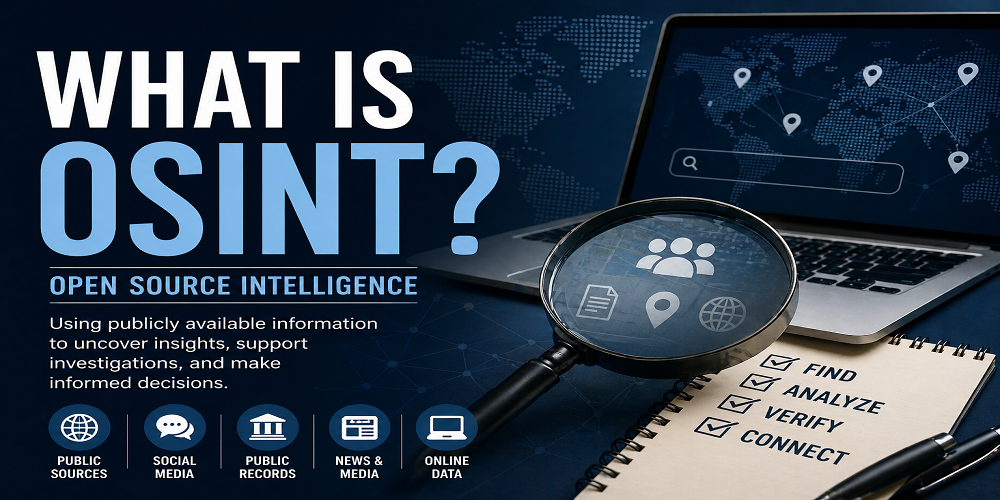
OSINT (Open Source Intelligence) refers to the process of collecting and analyzing information from publicly available sources.
These sources include:
- Social media platforms (Facebook, Instagram, LinkedIn, TikTok)
- Search engines (Google, Bing)
- Public records and court documents
- News articles and media reports
- Online forums and blogs
- Government databases
Unlike covert surveillance or restricted databases, OSINT relies strictly on legal and ethical access to information.
👉 According to the Central Intelligence Agency, OSINT is “intelligence collected from publicly available information and analyzed to answer specific intelligence requirements.”
Why OSINT Matters in Private Investigations
For modern investigators, OSINT is often the starting point of any investigation.
Here’s why:
1. Cost-Effective Intelligence Gathering
OSINT allows investigators to gather valuable information without expensive surveillance operations.
2. Speed and Accessibility
Information can often be found in minutes using the right tools and techniques.
3. Legal Compliance
Because OSINT uses public data, it helps investigators stay compliant with Canadian privacy laws such as the Personal Information Protection and Electronic Documents Act.
4. Evidence Building
Digital footprints can support:
- Background checks
- Fraud investigations
- Missing persons cases
- Workplace investigations
Common OSINT Techniques
🔍 Social Media Analysis
Investigators analyze profiles, posts, connections, and activity patterns.
🌐 Advanced Search Techniques
Using tools like Google operators (e.g., “site:”, “filetype:”) to uncover hidden information.
🗂️ Public Records Searches
Accessing court filings, business registrations, and licensing databases.
🧭 Geolocation and Image Analysis
Extracting location data from images or identifying landmarks.
🧠 Data Correlation
Connecting small pieces of information to build a larger investigative picture.
OSINT Tools Used by Investigators
Here are some commonly used OSINT tools:
- Maltego – Link analysis and data mapping
- Shodan – Internet-connected device search engine
- Google Dorks – Advanced search queries
- Wayback Machine – Historical website data from the Internet Archive
These tools allow investigators to go far beyond simple searches and uncover deep digital intelligence.
OSINT and Canadian Law: What You Need to Know
While OSINT uses public data, there are still legal boundaries.
In Canada, investigators must:
- Avoid accessing restricted or private accounts
- Not misrepresent themselves (no fake profiles for deception)
- Follow provincial licensing regulations
- Respect privacy laws and consent requirements
If you’re planning to work in Ontario, OSINT must be used within the framework of the Private Security and Investigative Services Act (PSISA).
How OSINT Fits Into Private Investigator Training
If you’re pursuing your licence, OSINT is not just a bonus skill—it’s becoming a core competency.
👉 Start with our guide:
How to Get Your Ontario Private Investigator Licence
👉 Then build foundational knowledge through training:
Ontario Private Investigator Course
You may also benefit from complementary skills:
These skills enhance how you use and present OSINT findings professionally.
Real-World Examples of OSINT in Action
🔎 Insurance Fraud Investigation
An individual claiming injury posts vacation photos showing physical activity.
🔎 Workplace Misconduct
Employee activity on social media contradicts reported sick leave.
🔎 Missing Persons
Online activity helps establish last known movements or contacts.
Limitations of OSINT
OSINT is powerful—but not perfect.
- Information may be outdated or inaccurate
- Fake profiles and misinformation exist
- Data overload can slow investigations
- Requires training to interpret correctly
This is why OSINT should be combined with traditional investigative techniques.
The Future of OSINT
OSINT is evolving rapidly with advancements in:
- Artificial Intelligence
- Data analytics
- Facial recognition (with legal considerations)
- Automation tools
For investigators, staying current with OSINT trends is essential to remain competitive and effective.
Final Thoughts
So, what is OSINT?
It’s the art and science of turning publicly available information into actionable intelligence.
For aspiring private investigators in Ontario, mastering OSINT can:
- Improve investigative efficiency
- Reduce costs
- Strengthen case evidence
- Enhance professional credibility
If you’re serious about entering the field, OSINT is a skill you can’t afford to ignore.